

Among the many studio bands that powered Jamaica’s recording industry during the 1970s, The Aggrovators stand out as one of the most prolific and influential. Operating primarily as the house band for producer Bunny Lee, the Aggrovators created the rhythmic backbone for hundreds of reggae recordings and played a central role in shaping the sound of roots reggae and dub during the decade.
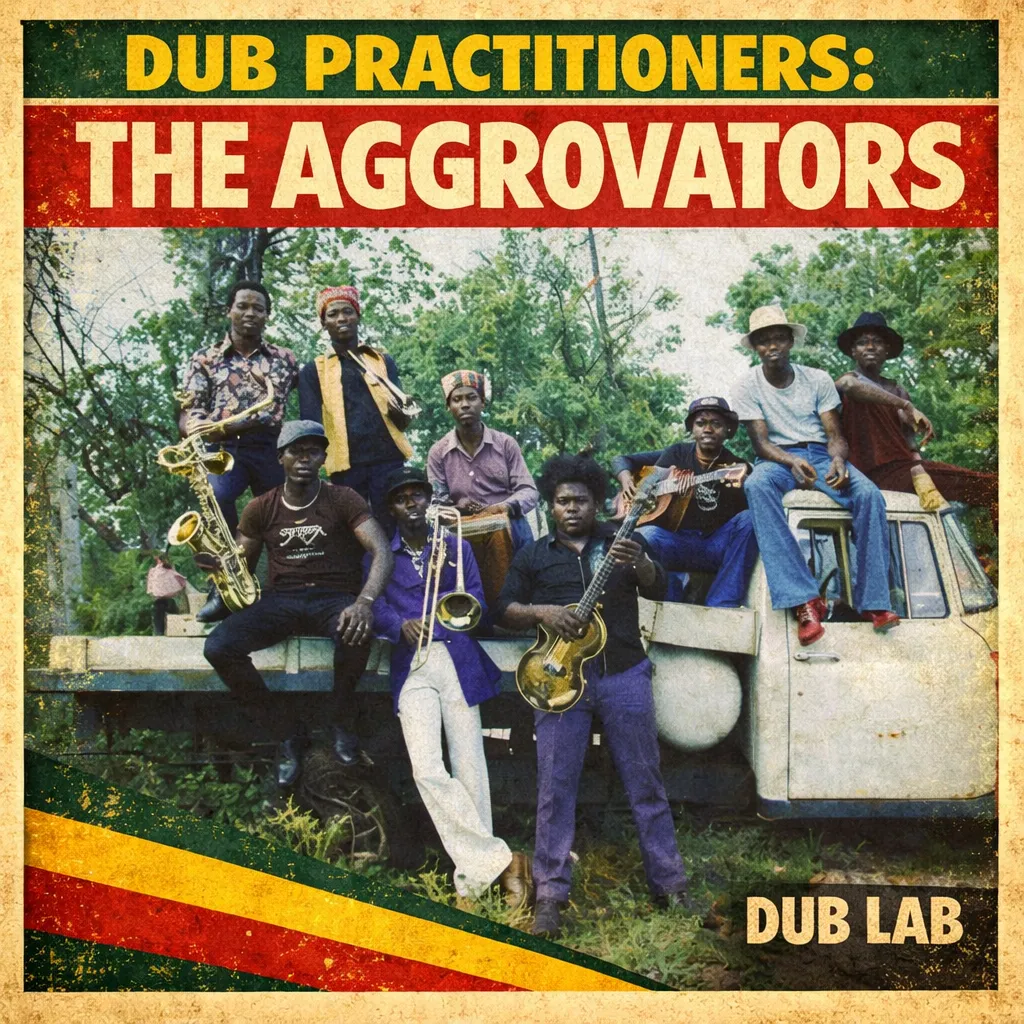
Unlike many bands with fixed membership, the Aggrovators functioned more like a collective of Jamaica’s top session musicians. The lineup changed depending on the studio session, but the group consistently included some of the most skilled instrumentalists in Kingston. Musicians associated with the Aggrovators included bassist Robbie Shakespeare, drummer Sly Dunbar, guitarist Chinna Smith, keyboardist Ansel Collins, and drummer Carlton Santa Davis. Because of this rotating membership, the Aggrovators were able to adapt easily to different producers and recording environments while maintaining a consistent rhythmic identity.
Producer Bunny Lee, often called “Striker,” was one of the most productive figures in reggae history. During the 1970s he released an enormous number of singles aimed primarily at Jamaica’s powerful sound systems. In order to keep up with the constant demand for new music, Lee relied on dependable studio musicians who could record strong rhythms quickly. The Aggrovators became his primary musical engine.
Many of their recordings took place at Kingston’s legendary Channel One Studio, which was famous for its heavy drum sound and deep bass response. Channel One had state-of-the-art equipment for the time, and its engineers were skilled at capturing the powerful low-end frequencies that defined reggae. These qualities made the studio particularly attractive for producers creating music intended for sound system dances.
The Aggrovators’ rhythm tracks often followed a simple but highly effective formula. The bassline provided the central melodic movement, while the drums emphasized the one-drop rhythm that had become the signature groove of reggae. Guitar and keyboard parts filled out the arrangement with off-beat chords known as the “skank,” giving the music its characteristic bounce.
What made the Aggrovators special was their ability to create rhythms that felt both solid and flexible. A single rhythm track could support multiple vocal recordings, allowing producers to reuse the same instrumental foundation with different singers. This practice, known as “versioning,” became a defining feature of Jamaican music production.
Many of the songs recorded by the Aggrovators were later transformed into dub versions by the legendary engineer King Tubby. After the original vocal recordings were completed, Bunny Lee often sent the tapes to Tubby’s studio in Kingston’s Waterhouse district. There, Tubby used the mixing console to create new instrumental versions that emphasized bass and drums while applying echo and reverb effects.
These dub mixes became hugely popular with sound system audiences. Selectors could play both the vocal version and the dub version of a track during a dance, creating dramatic shifts in mood on the dance floor. The Aggrovators’ steady rhythms provided the perfect foundation for these sonic experiments.
Throughout the 1970s the band backed a remarkable range of singers. Among the most important were Johnny Clarke, whose militant roots anthems became major hits in Jamaica. Songs like “Move Out of Babylon” and “None Shall Escape the Judgment” captured the spiritual urgency of the Rastafarian movement and resonated strongly with Jamaican audiences.
The Aggrovators also worked extensively with Cornell Campbell, whose falsetto voice brought a soulful dimension to roots reggae. Campbell’s recordings with Bunny Lee combined spiritual themes with smooth vocal melodies, making them popular both in Jamaica and abroad.
Another frequent collaborator was Horace Andy, whose haunting vocal style matched perfectly with the band’s deep rhythms. Tracks like “Skylarking” became classics of the era and demonstrated the versatility of the Aggrovators’ sound.
The band also recorded instrumental tracks under their own name, many of which were later used as the basis for dub albums. These recordings allowed the musicians to explore the possibilities of reggae rhythm without the presence of a lead vocalist.
By the late 1970s the Aggrovators’ influence extended far beyond Jamaica. Their rhythms circulated internationally through reggae singles, dub albums, and sound system recordings. Producers and musicians in the United Kingdom and the United States studied these recordings closely, incorporating similar bass-heavy grooves into their own music.
The Aggrovators helped establish many of the production techniques that would later shape dancehall and modern reggae. Their emphasis on strong rhythm tracks, reusable riddims, and dub experimentation laid the groundwork for future generations of Jamaican producers.
Although the band’s membership was fluid and many listeners may not recognize their name immediately, the Aggrovators’ music remains deeply embedded in reggae history. Their rhythms powered some of the most important recordings of the roots era and provided the raw material for many of dub’s greatest experiments.
Today, their work continues to influence reggae musicians and producers around the world. The Aggrovators represent the collaborative spirit of Jamaica’s studio culture, where talented session musicians and visionary producers worked together to create music that still resonates decades later.
Essential Aggrovators Playlist
Creation Rebel – Johnny Clarke
Move Out of Babylon – Johnny Clarke
None Shall Escape the Judgment – Johnny Clarke
Zion Gate – Cornell Campbell
Skylarking – Horace Andy
Rockers Time Now – Johnny Clarke
Dub Jackpot – The Aggrovators
Blood Dunza – The Aggrovators
King Tubby Meets the Aggrovators at Dub Station
Natty Dread a Weh She Want – Horace Andy
Better Must Come – Delroy Wilson
Roots Natty Congo – Johnny Clarke