

Producer and recording engineer Errol Thompson was one of the most important figures behind the scenes during reggae’s golden age. Although his name may not be as widely recognized as some performers, Thompson helped shape the sound of reggae and dub throughout the 1970s. Working closely with producer Joe Gibbs, he formed one half of the legendary production team known as The Mighty Two, a partnership responsible for some of the most influential recordings in Jamaican music.
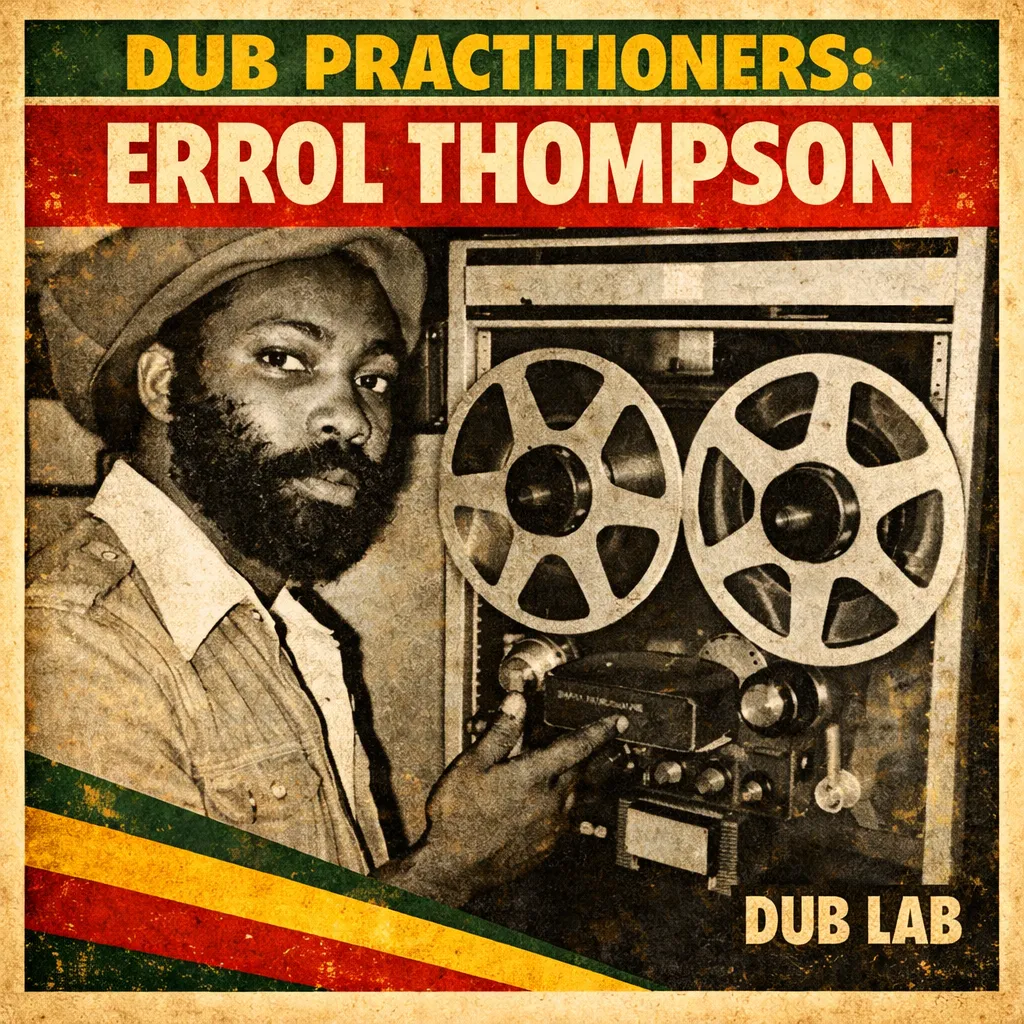
Errol Thompson was born in Kingston, Jamaica, in 1950 and entered the music industry at a young age. During the late 1960s Jamaica’s recording scene was expanding rapidly, with producers releasing singles at an incredible pace to supply the country’s booming sound system culture. Studios required skilled engineers who understood both the technical and musical aspects of recording. Thompson quickly proved himself to be one of the most talented young engineers in Kingston.
His early work included time spent at several recording studios, where he learned the fundamentals of microphone placement, mixing, and tape editing. These skills became essential during a period when reggae producers were experimenting with new production techniques and sonic textures. Thompson’s attention to detail and deep understanding of rhythm soon caught the attention of Joe Gibbs, one of Jamaica’s most ambitious producers.
When Thompson began working with Joe Gibbs in the early 1970s, the partnership proved immediately productive. Gibbs had an ear for strong songs and talented artists, while Thompson had the technical ability to capture and shape their sound in the studio. Together they began producing recordings that stood out for their clarity, balance, and rhythmic power.
Their collaboration soon earned them the nickname The Mighty Two, reflecting both their productivity and their impact on the Jamaican music industry. The Mighty Two worked with a wide range of artists, helping to produce hits that reached audiences far beyond Jamaica.
One of the groups most closely associated with their production work was Culture, whose powerful roots reggae recordings became anthems of the era. Culture’s album Two Sevens Clash captured the political tension and spiritual intensity of late-1970s Jamaica, with songs addressing themes of social justice, prophecy, and Rastafarian faith.
Thompson’s engineering style played a crucial role in the success of these recordings. He understood how to balance the heavy bass and drum patterns central to reggae while maintaining clarity for vocals and melodic instruments. His mixes gave songs a strong rhythmic foundation while allowing the lyrics to remain front and center.
While Thompson excelled at producing vocal recordings, his most lasting influence may lie in the development of dub music. Dub emerged in Jamaica during the late 1960s and early 1970s when engineers began creating instrumental versions of reggae tracks by removing the vocal and emphasizing the rhythm section. These versions allowed sound system selectors to extend the life of a song and provided space for deejays to perform live vocal improvisations.
Thompson embraced this technique and helped push it further. Working with Joe Gibbs and the studio band The Professionals, he developed a style of dub mixing that combined heavy bass, dramatic echo effects, and creative use of silence. By dropping instruments in and out of the mix, Thompson created dynamic soundscapes that transformed ordinary reggae recordings into entirely new listening experiences.
The most famous example of this work is the African Dub series of albums, released during the mid-1970s. These records featured dub versions of popular songs produced by Joe Gibbs, remixed by Thompson into spacious and hypnotic instrumental tracks. The African Dub albums quickly became classics of the genre and remain among the most influential dub recordings ever made.
Unlike some dub engineers who favored extreme experimentation, Thompson maintained a strong sense of musical balance. His mixes emphasized groove and rhythm rather than purely abstract effects. This approach made his dubs especially effective on sound systems, where deep bass and clear drum patterns were essential for moving the dance floor.
Beyond dub, the Mighty Two produced numerous hits by some of reggae’s most respected artists. Thompson worked on recordings by Dennis Brown, often called the Crown Prince of Reggae, as well as Gregory Isaacs, whose smooth vocal style defined lovers rock.
Thompson also contributed to recordings by Prince Far I, whose deep chanting voice gave roots reggae a prophetic tone. These collaborations demonstrated Thompson’s ability to work across different styles within reggae while maintaining a consistent sonic identity.
Sadly, Errol Thompson’s life and career were cut short when he passed away in 1980 at only thirty years old. Despite his relatively brief career, his influence on reggae production remains enormous. Many of the techniques he refined during the 1970s continue to shape dub, electronic music, and remix culture today.
The work of the Mighty Two helped define the sound of roots reggae during one of the most creative periods in Jamaican music history. Thompson’s engineering skills, combined with Joe Gibbs’ production vision, resulted in recordings that still resonate with listeners decades later.
Today, Errol Thompson is remembered as one of reggae’s most important studio innovators. His contributions behind the mixing console transformed reggae production and helped elevate dub into a fully realized art form.
Essential Errol Thompson Playlist
African Dub – Joe Gibbs & the Professionals
African Dub Chapter 2 – Joe Gibbs & the Professionals
Two Sevens Clash – Culture
Tribal War – Culture
Heavy Manners – Prince Far I
Love Me Girl – Cornell Campbell
My Only Lover – Gregory Isaacs
Money in My Pocket – Dennis Brown
African Dub Chapter Three – Joe Gibbs & the Professionals
African Dub Chapter Four – Joe Gibbs & the Professionals
Rasta Dub – Joe Gibbs & the Professionals
African Dub All Mighty – Joe Gibbs & the Professionals