

In the mid-1980s, few voices in Jamaican dancehall were as instantly recognizable as Tenor Saw. His haunting, almost floating vocal style and unforgettable hooks helped define the emerging digital dancehall era. At just nineteen years old he had already delivered one of the genre’s most iconic songs, Ring the Alarm, a track that would echo through sound systems and dance floors for decades.
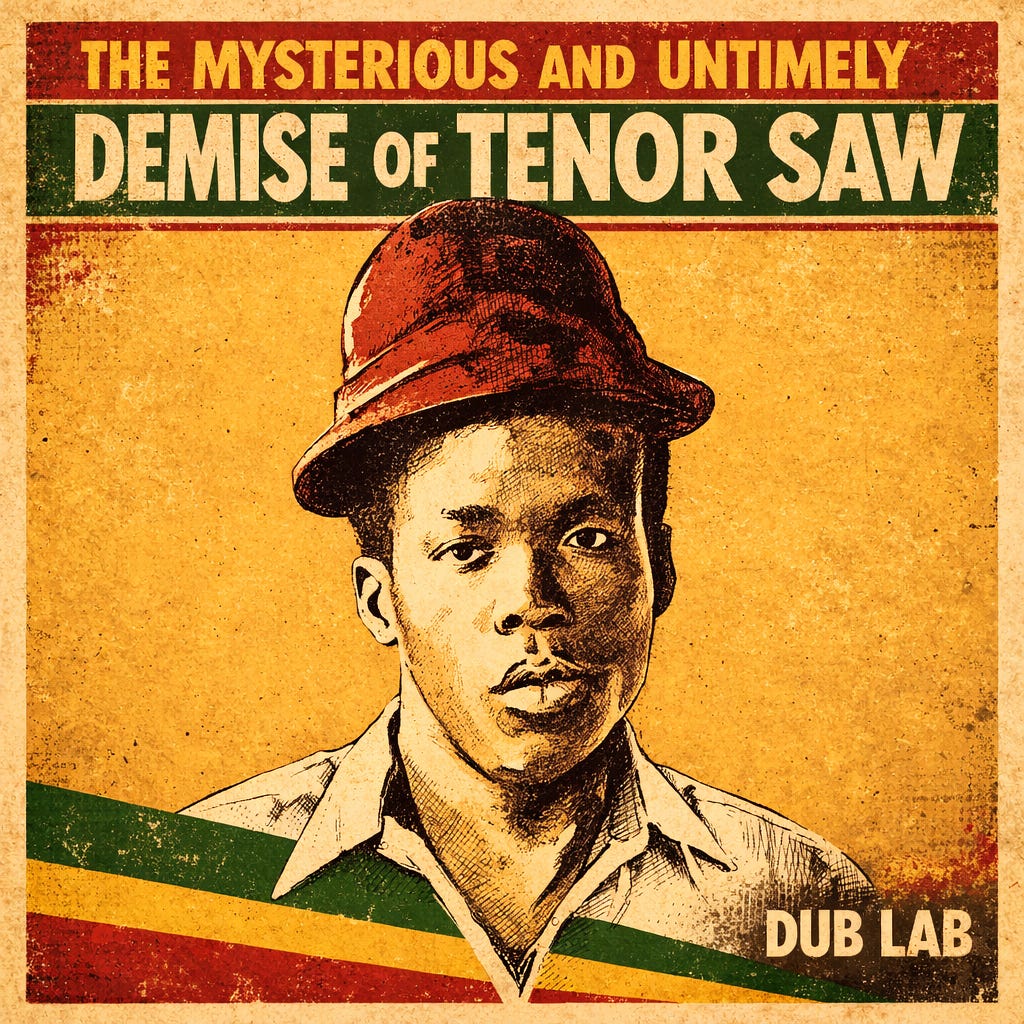
Yet by the summer of 1988, Tenor Saw was dead at only twenty-one years old. His sudden death in Houston, Texas shocked fans and fellow musicians across Jamaica and the diaspora. Official reports later described the incident as a hit-and-run accident, but the circumstances surrounding his final days, along with the volatile world of early dancehall, gave rise to rumors, speculation, and lingering questions that still surround his demise today.
From Kingston Choir Boy to Dancehall Star
Tenor Saw was born Clive Bright in Kingston, Jamaica on December 2, 1966. Raised in a religious household, he spent his early years singing in church choirs, where his distinctive falsetto-like voice first emerged. The musical discipline of the church shaped his phrasing and melodic style.
But Kingston in the early 1980s was a city alive with sound system culture. Young DJs and singjays battled on massive speaker stacks in dancehall yards across neighborhoods like Waterhouse and Duhaney Park. Bright was drawn into that world.
His first notable recording, “Roll Call,” appeared in 1984 and quickly caught attention on the Jamaican airwaves. Soon afterward he released “Pumpkin Belly” on the revolutionary Sleng Teng riddim, one of the first digital reggae rhythms that helped transform dancehall music.
Then came the song that changed everything.
“Ring the Alarm,” recorded in 1985, became an instant anthem. Its sharp lyrics and hypnotic vocal delivery turned Tenor Saw into a star almost overnight. The song’s famous opening line about the “soundboy” trembling became part of dancehall folklore.
Within a year, the young singjay had become one of the most influential artists of the early digital reggae movement. Tenor Saw was widely regarded as a defining voice of the mid-1980s dancehall era.
A New Era of Dancehall
The mid-1980s were a chaotic but creative period in Jamaican music. Traditional roots reggae was giving way to a faster, more aggressive form of dancehall driven by drum machines and synthesizers.
The new sound came largely from studios like King Jammy and producers who embraced digital technology. The rhythms were raw, minimal, and designed to shake dancehall speakers.
But the culture surrounding the music could also be volatile.
Dancehall in that era was tied closely to Kingston’s street culture. Rival sound systems competed fiercely. Promoters, artists, and crews traveled constantly between Jamaica, New York, Miami, and Toronto. Money flowed quickly but unpredictably.
In that environment, artists were often exposed to:
drug culture in nightlife scenes
disputes over show payments
rivalries between performers
dangerous late-night travel
Many performers were young men barely out of their teens, suddenly navigating fame and the pressures of international touring.
Tenor Saw was one of them.
America and the Pressures of Success
By 1986 Tenor Saw had begun spending more time in the United States, performing in reggae hubs like Miami and New York. The American reggae circuit promised bigger crowds and larger paydays than Jamaica’s dancehall scene.
But the move also exposed artists to a very different environment.
Tour schedules were relentless, and promoters sometimes failed to pay performers properly. There were stories of artists disappearing between shows, promoters vanishing with advance money, and musicians struggling with homesickness and stress.
Rumors circulated that Tenor Saw himself was having difficulties during this period. Some accounts from friends and industry insiders suggested he had begun experimenting with drugs while living abroad. Others claimed he was becoming increasingly unreliable for studio sessions and performances.
While these claims are difficult to verify, they reflect the unstable world surrounding many dancehall artists in the late 1980s.
The Houston Incident
The mystery surrounding Tenor Saw’s death centers on the events of July 31, 1988 in Houston, Texas.
Late that night the singer was reportedly seen near a driveway along Mykawa Road, an industrial area outside the city center. Moments later witnesses heard a crash.
Tenor Saw had been struck by a vehicle in what authorities later described as a hit-and-run accident. The driver fled the scene.
The injured singer was taken by ambulance to Ben Taub General Hospital, where doctors fought to save his life. His injuries were severe. He underwent emergency surgery, including the amputation of his right leg below the knee, and was treated for massive head trauma.
For nearly two weeks he remained in critical condition.
On August 13, 1988, Tenor Saw died from complications related to those injuries, including a severe lung infection and head trauma.
He was only twenty-one years old.
Rumors, Confusion, and Conspiracy
Despite the official explanation, confusion quickly surrounded the case.
In Jamaica, news of the accident spread slowly. Communication delays, compounded by Hurricane Gilbert striking the island in 1988, meant that family members struggled to receive accurate information.
Meanwhile, rumors exploded across the reggae world.
Some claimed the singer had been murdered after a dispute over performance money. Others suggested he had been attacked during a drug deal gone wrong. Still others believed promoters might have arranged violence rather than pay him.
Adding to the confusion, one Jamaican newspaper even reported months later that the singer had been shot in New York, a completely incorrect story that only deepened the mystery.
These rumors persisted partly because the driver responsible for the hit-and-run was never identified.
Without a suspect, speculation filled the void.
The Dangerous Side of Dancehall
Tenor Saw’s death was not the only tragedy to strike the dancehall world during that era.
Several prominent artists associated with the scene died young, sometimes in violent circumstances. The music industry around dancehall could be rough, fueled by nightlife, territorial rivalries, and the intense competition between artists.
Even those close to Tenor Saw were affected by the turbulence of the era. His cousin, dancehall singer Nitty Gritty, recorded a tribute song titled “Who Killed Tenor Saw?” after the tragedy.
Ironically, Nitty Gritty himself would later be killed in a shooting in New York in 1991.
These events reinforced the perception that early dancehall was a dangerous world where fame and violence often intersected.
The Legacy of a Short Life
Although Tenor Saw’s career lasted barely four years, his influence on reggae and dancehall remains enormous.
His vocal style helped define what became known as the Waterhouse style, characterized by high-pitched melodic phrasing and hypnotic delivery. Artists across the decades have drawn inspiration from his sound.
“Ring the Alarm” alone continues to echo through sound system culture. It has been sampled, remixed, and referenced by musicians in genres ranging from reggae to hip-hop and electronic music.
Tribute songs, including “Nuff Man A Dead” by Super Cat, mourned the loss of a rising star whose career had barely begun.
An Enduring Mystery
More than three decades later, the story of Tenor Saw’s death still carries an aura of mystery.
Official records describe a tragic hit-and-run accident. Yet the unanswered questions surrounding that night in Houston continue to intrigue fans and historians of Jamaican music.
Why was he alone in an industrial area late at night?
Who was the driver who struck him and disappeared?
And how did one of dancehall’s brightest young voices end up so far from home in such circumstances?
Those questions may never be fully answered.
But one thing remains clear: the voice of Tenor Saw, preserved in recordings from the explosive early years of digital dancehall, still rings out across the sound systems of the world.
And every time that famous line echoes through the speakers…
“Ring the alarm!”
…it reminds listeners of a brilliant talent whose life ended far too soon.
Selected Discography
Ring the Alarm
Pumpkin Belly
Golden Hen
Lots of Sign
Fever
Run Come Call Me
Shirley Jones
Roll Call
Who’s Gonna Help Me Praise
Dancehall Feeling